Area leaders meet to discuss reuse hub potential

Oct 12, 2026
| Posted in
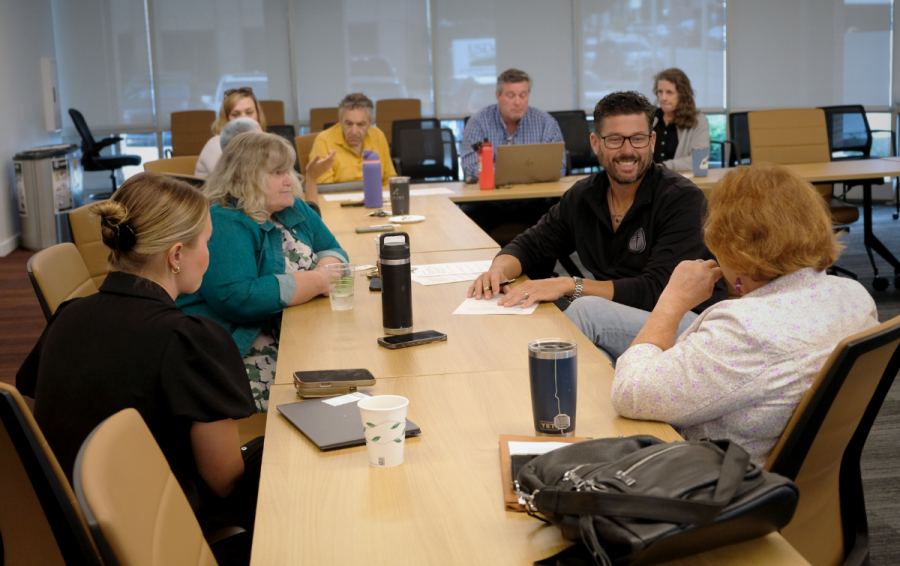
Two separate groups huddled around two tables having a discussion

What escapes the loop goes to the landfill

Material recovery, which includes efforts to reuse, recycle, repair, resell, donate and salvage parts from pre-owned usable items, has vocal and dedicated support within the region. These efforts fall short when materials fall through the cracks because of gaps in coordination, logistics and physical capacity for hard-to-place materials. 

For instance, of the 5,468 tons of bulky item waste picked up locally, only 35 tons of it was diverted into alternatives to the landfill.

Challenges ahead

Topics of discussion for breakout groups included the bottlenecks that material flows hit due to a lack of equipment, a lack of storage and a lack of government authority.

And although donating usable items remains a popular way of disposal (and for picking up secondhand items), borrowing, renting and sharing items to prevent unnecessary purchases and consumption is less common. Landfilling and discarding items at the curb, with no investment in where they end up, also remains a widely practiced disposal method.

Often, residents bypass donating items because either they don't know where to take something or transportation is too difficult, especially when transporting large items. Almost all respondents in a recent survey said that they were very likely to donate bulky items if the process were made easier. A similar number responded they would donate more if home pickup services were expanded.

Closing the circle

The primary goal of the ReLoop KC plan is to close these gaps by breaking down organizational silos, increasing collaboration and pulling together resources to close these gaps.

Participants discussed the pros and cons of three solutions: 

  • Building out the formalized cooperation of the existing network of 190+ reuse organizations in the region.
  • Developing a website where residents, businesses and organizations give, find and exchange materials in a marketplace setting (which could also be used by reuse organizations to trade surplus hard-to-place inventory between themselves).
  • To take the concept of a reuse hub and transform it into a physical facility that receives, sorts, stores, repairs and "de-manufactures" reusable materials, while also providing a fleet of trucks that can move materials throughout the region and provide home pickup services.

The conclusion participants walked away with was to employ all three ideas in sequential phases over the coming years, prioritizing the network first, with a goal for reuse organizations to convene with the MARC Solid Waste Management District on a quarterly basis to share updates on surplus materials, needs and solutions on hard-to-place items.

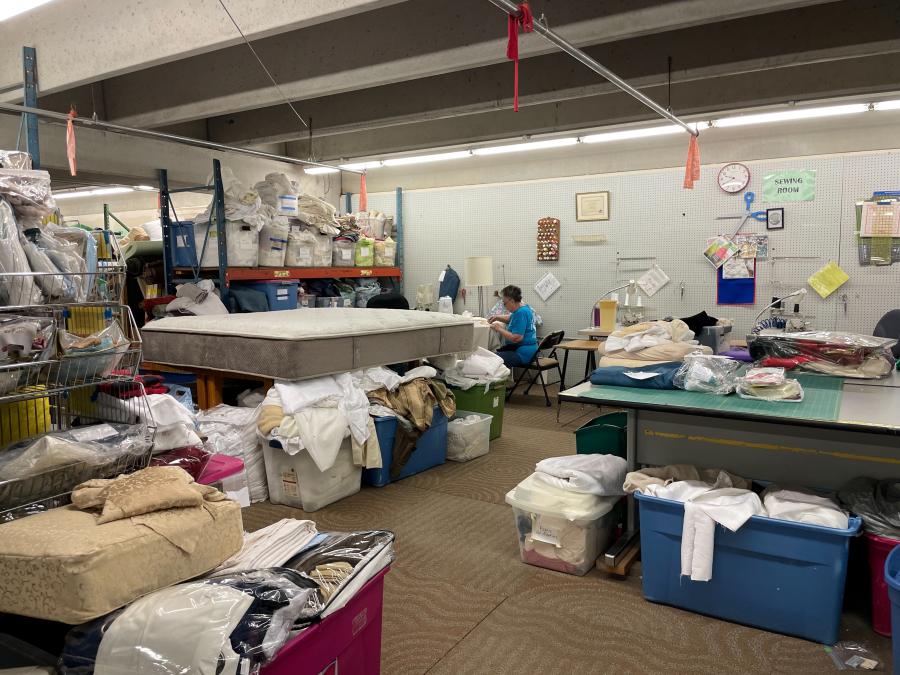
Inside the workshop at Sewing Labs, where large bulky mattresses and other items await repair
Flourish Furniture Bank repair warehouse showcases what a scaled-up reuse and repair hub could look like.