First Suburbs Coalition
Latest News
Next meeting: September 2009. Date and time TBD.
- - - - - - - - - - - - - - - - - - - - -
Northeast Johnson County and the First Suburbs Coalition is focus of Kansas City Star article.
- - - - - - - - - - - - - - - - - - - - -
The city of Mission and the First Suburbs Coalition hosted the National League of Cities First Tier Suburbs Task Force and founder William Hudnut. In a two day series of meetings and events the First Suburbs Coalition demonstrated the exciting projects and programs that are underway in the region. Laura McConwell, NLC First Tier Task Force Chair, thanks all of the communities that assisted with this event.
- - - - - - - - - - - - - - - - - - - - -
The coalition and the UMKC School of Design partnered to develop strategies for eight retail areas. The designs have been presented and local governments are now using them as a basis for redevelopment discussions. The designs are the basis for a discussion with metro developers about the feasibility of such projects. The UMKC students did a terrific job, ably assisted by their faculty advisor, Prof Michael Frisch, and design studio assistant Vanessa Spartan.
New on our Web site
First suburbs are communities where a majority of the housing was built shortly after World War II and limited amounts of undeveloped land exist within the city's boundaries.
The principal issue facing first suburbs is the age of public and private infrastructure — the homes, businesses and utilities that make up the physical base of the community. Not only does aging infrastructure present maintenance problems, but even well-maintained buildings are often obsolete in terms of modern standards.
In order to continue to attract and retain families and businesses, first suburbs need to find ways not only to maintain their housing, business structures and utilities, but also to renew and revitalize these facilities. The First Suburbs Coalition has identified three key issues that form the basis of the organization's agenda:
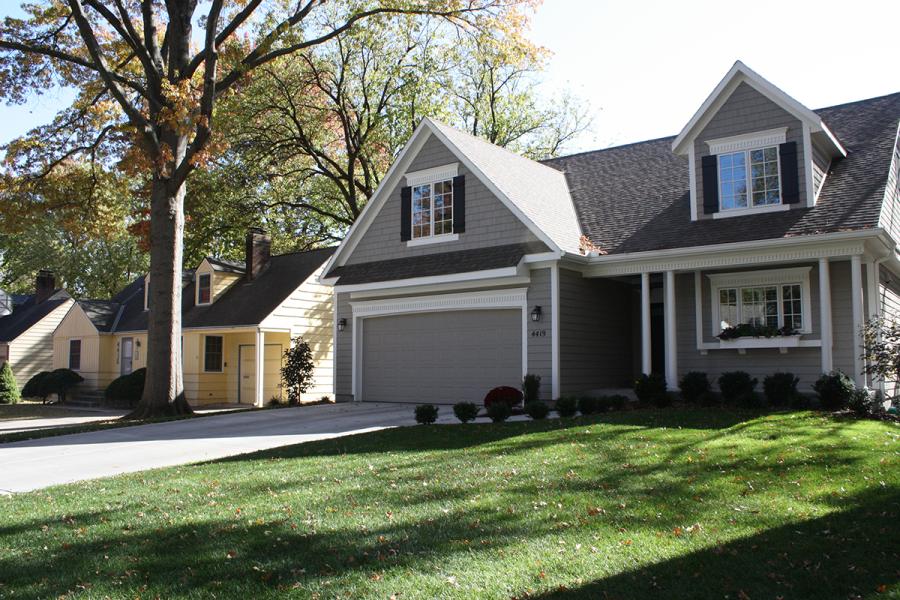
- Modernizing housing stock, which was principally built in the years following World War II. This housing stock is often smaller than current standards, does not contain amenities that are expected in a modern home, may have been built with lower quality materials and may be built on a lot that allows little room for expansion.
- Attracting and retaining businesses that serve the communities. Retail businesses in particular have moved to more modern suburban locations, stripping first suburbs of services and revenue.
- Maintaining and upgrading an aging public infrastructure. This task is especially difficult when revenue is stagnant or declining.
The coalition currently has four working groups, each with their own agenda. If you are interested in participating in one or more of these working groups contact Dean Katerndahl.