Commonality: Interactive and Engaging Environments
Creates spaces that stimulate exploration, creativity and social interaction.
Wheels Study
Teachers provided a variety of interesting materials for children to explore, investigate, and create. Children worked together to construct vehicles with recyclable materials and test ideas about wheels. They participated in rich discussions about wheels they've seen at school, at home, and in their neighborhood.
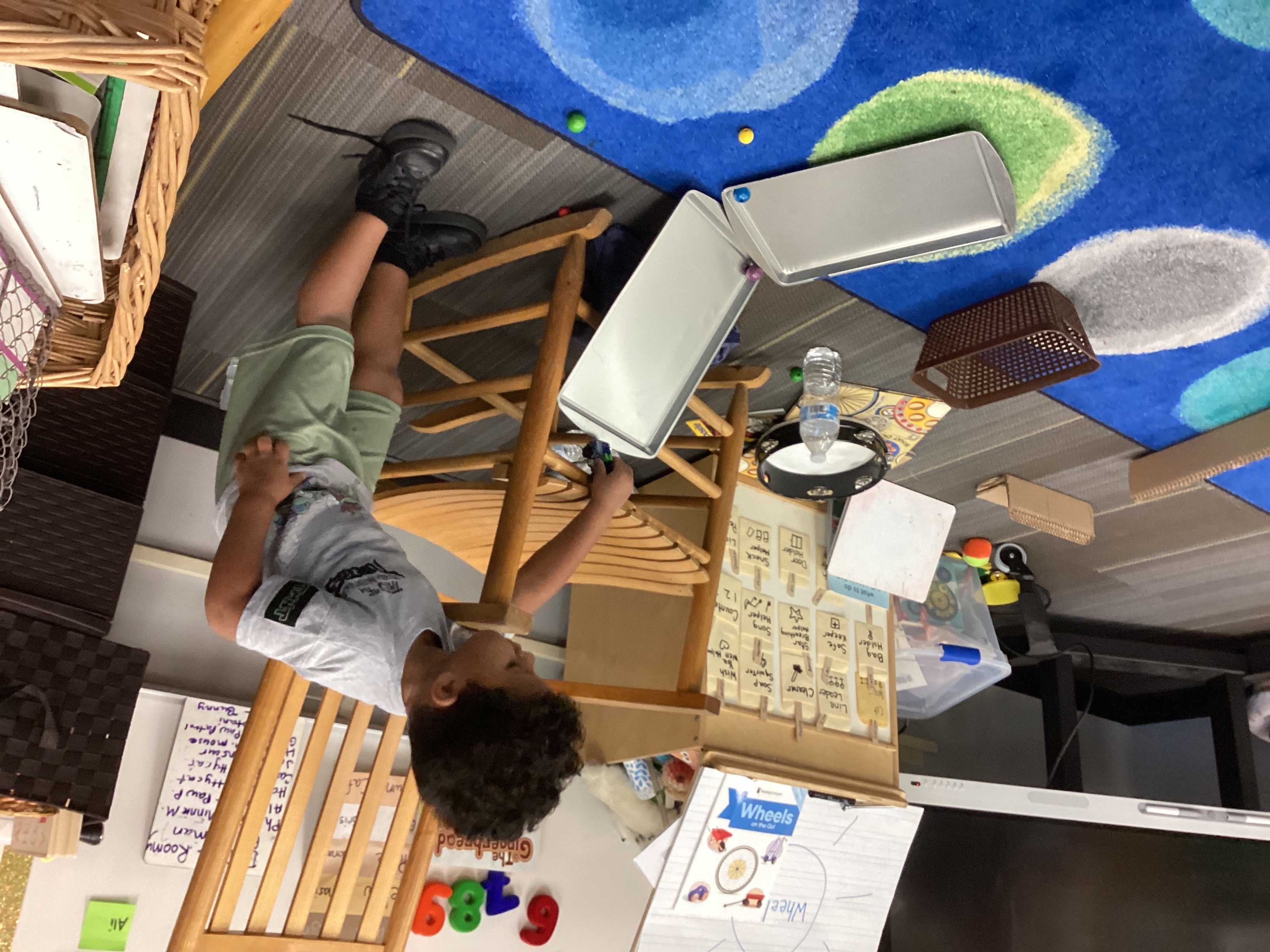
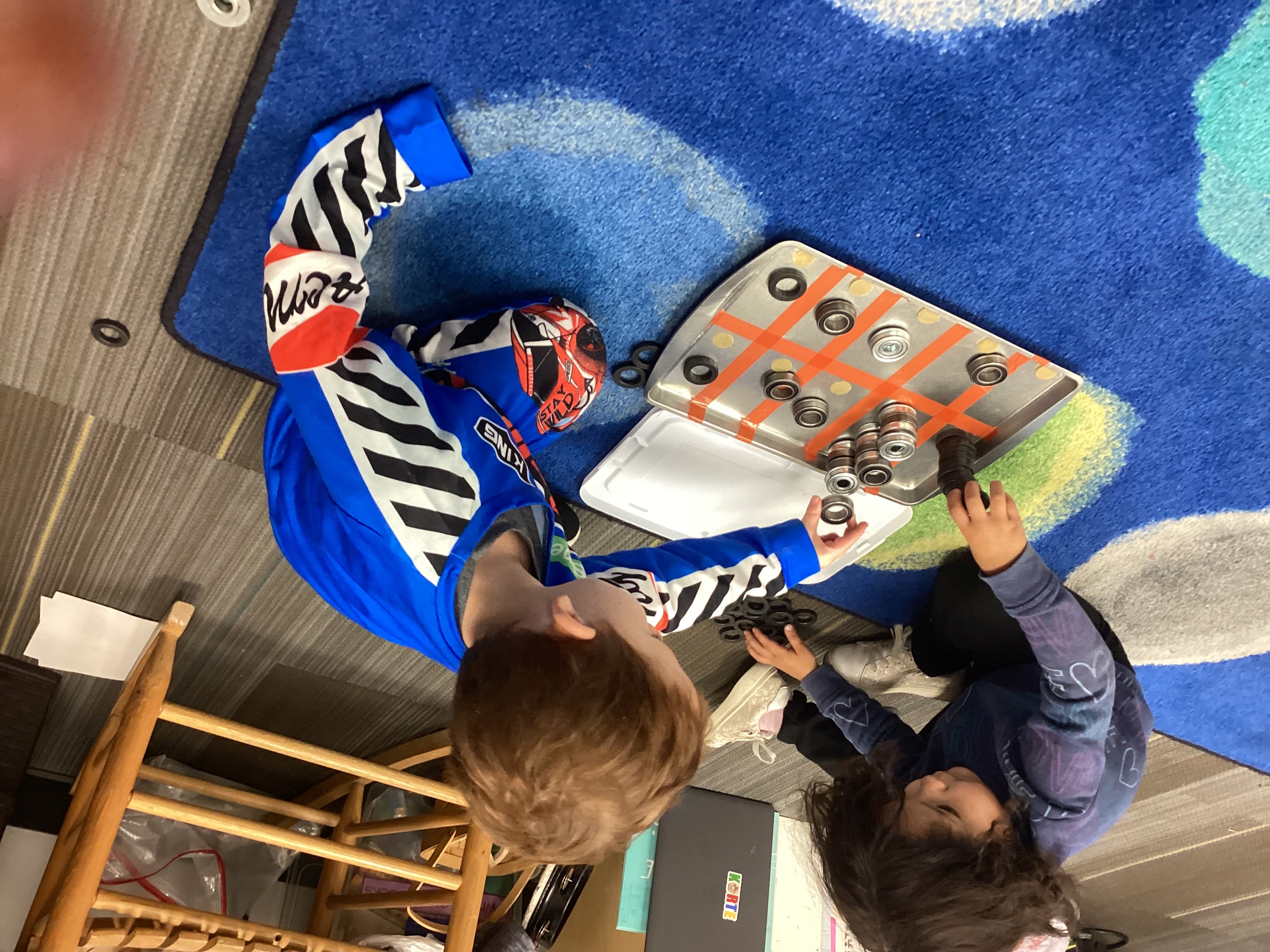
Our wheels study took off when a 3-year-old little girl turned her trike upside down. She started to spin the pedals and wheels of the trike. The other children then followed suit and did the same thing. From there, we introduced the wheels study to the children. Wheels were placed in our block center. A group of boys started to roll the wheels. Then a child made an engine noise. They decided to race the wheels. They got the tape and made their own roads.
A small group of children used the ten-frame tray and circle frames. A child used the steering wheel. She would go around the classroom singing “Wheels on the Bus” and asking friends to ride her bus. We took different sizes of balls and ramps, trays, and blocks to roll the balls.
A child asked for yellow, black, and red paint at the art easel. He called the teacher over. “I painted a bus.” He explained content from a book that was read during literacy time.
There were many dictations and language experiences on finding wheels in our school, in our environments, and outside of school.
We used different textures to paint with for art experiences. We collected junk art for children to create. Many children created cars, trucks and semis.
We were lucky to have deliveries from a milk, food truck and garbage truck happen right outside our window. We had lots of moments where we stopped what we were doing and went to the window or outside.
Thank you to the Independence School District Head Start program for sharing their work.
Four Senses Potion Lab
The teacher set up a sensory experience through play provocation on the playground. The children were invited to explore spices, water, food color and other household items such as vinegar and baking soda to encourage observation through their smell and sight senses.
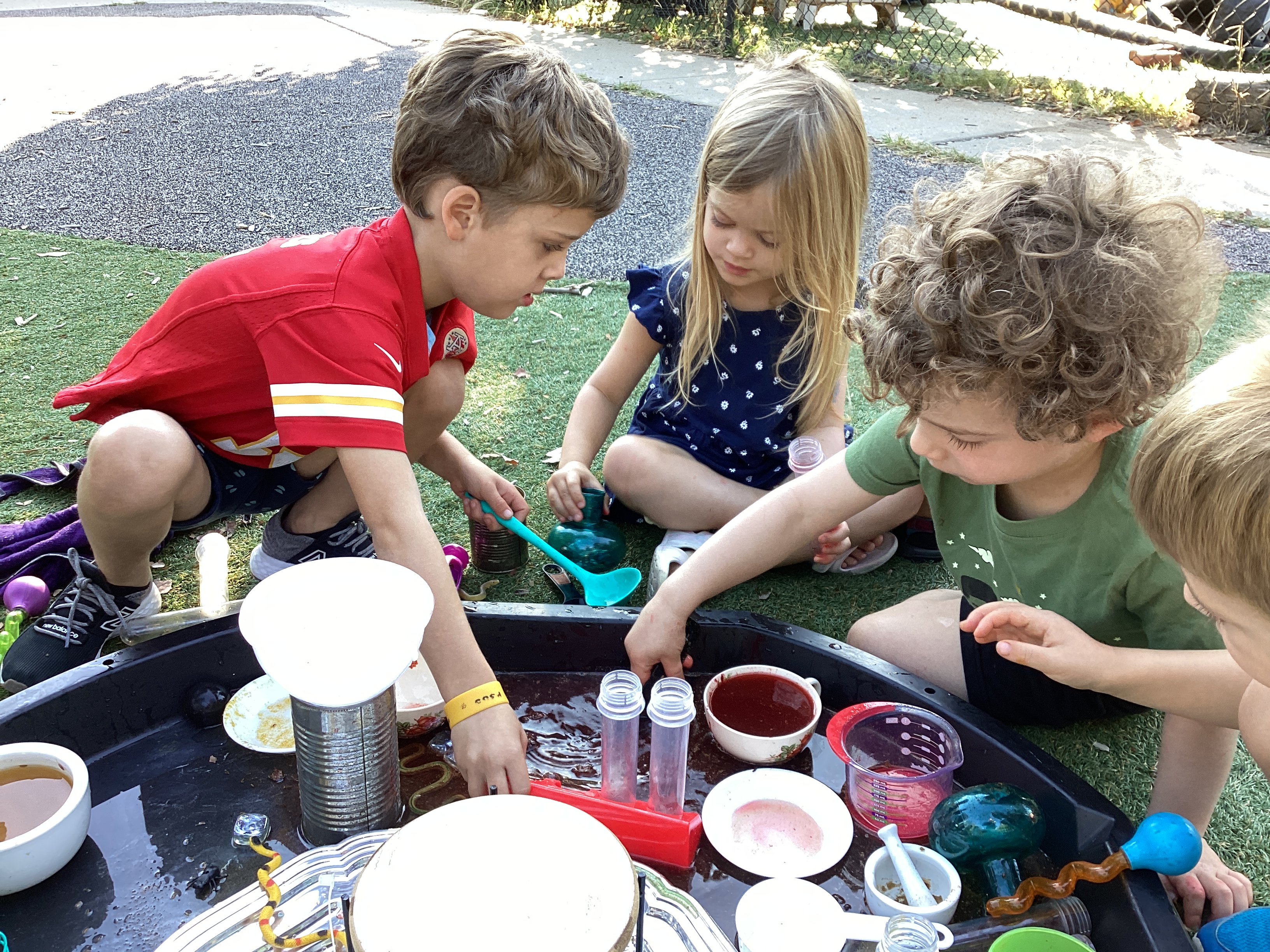
The teacher also included glass vase fillers and glitter to add more dimension and allow for sound and texture. The children were able to fill and pour, mix colors and textures, and observe volume. They were also able to practice sharing space and materials, independently explore the provocation, and interact with each other. Notice the concentration in the children’s faces and the conversations they have with each other!
Infant music and movement
Infants and teachers have a joyful shared experience as they dance and sing together.
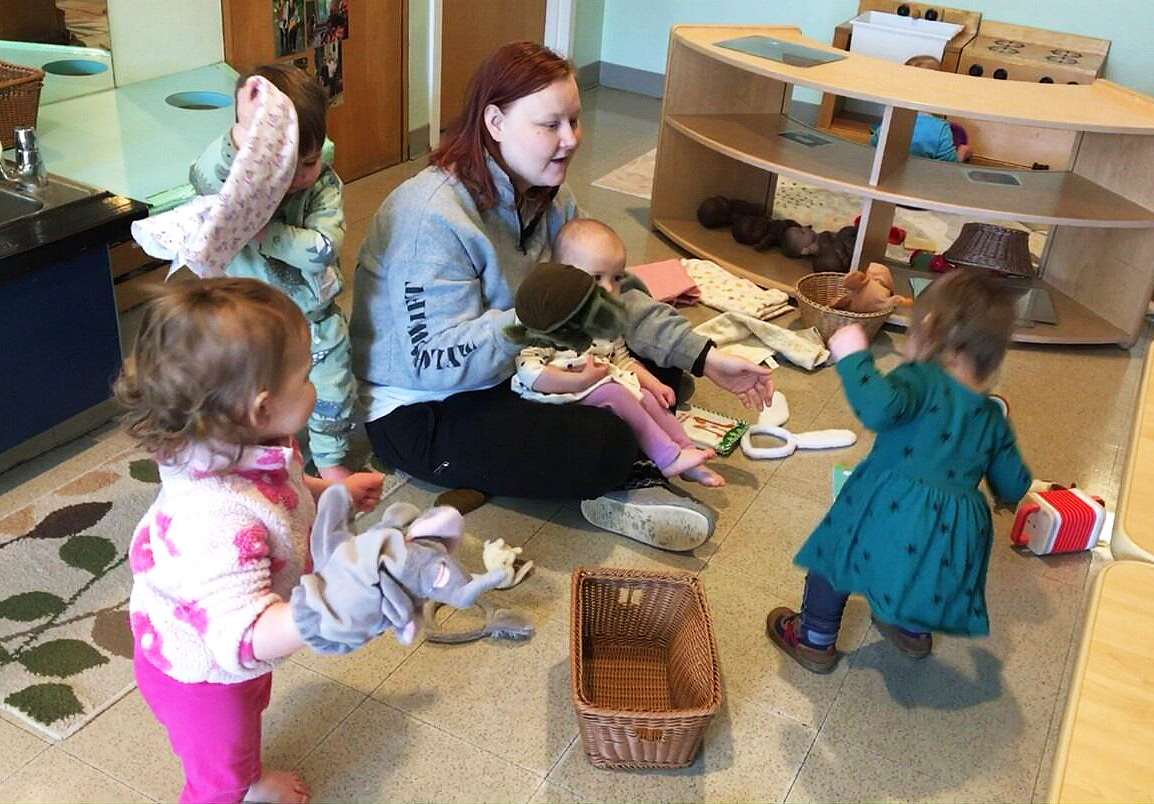
Many skills are met through music and movement activities. Children move their bodies in various ways, demonstrating their perceptual motor skills, responsiveness to language, self-expression through dance, and social relationships with familiar adults and peers through imitation.
Early Childhood Education in Greater Kansas City
Share your stories
Submission form
Does your program have a story that exemplifies holistic development? Let us know and it might be featured here.