Why preapproved plans work
Matthew Petty served as a consultant to Overland Park and says the core benefit of using preapproved plans is the city does the regulatory work up front, so builders don’t have to repeat it.
Successful programs tend to share a few characteristics: participation is voluntary, the catalog remains limited in size (typically eight to 10 plans per building type), and stakeholder feedback is collected early in the process.
Petty’s team at Pattern Zones Co. has worked with several communities nationwide to implement these programs in their cities, including Fayetteville, Arkansas, South Bend, Indiana. and Claremore, Oklahoma. Kyle Clifton, Claremore’s director of planning, also presented at February’s Housing Policy Innovation Series event about the city’s program's results. Since launching in 2019, Clifton says preapproved applications have achieved 24-hour turnarounds, with construction costs at $120–$135 per square foot compared to $155–$190 for typical market-rate construction.
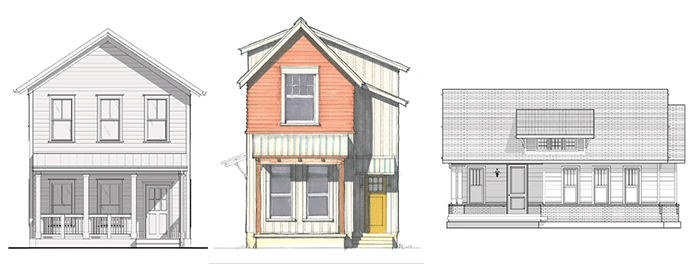
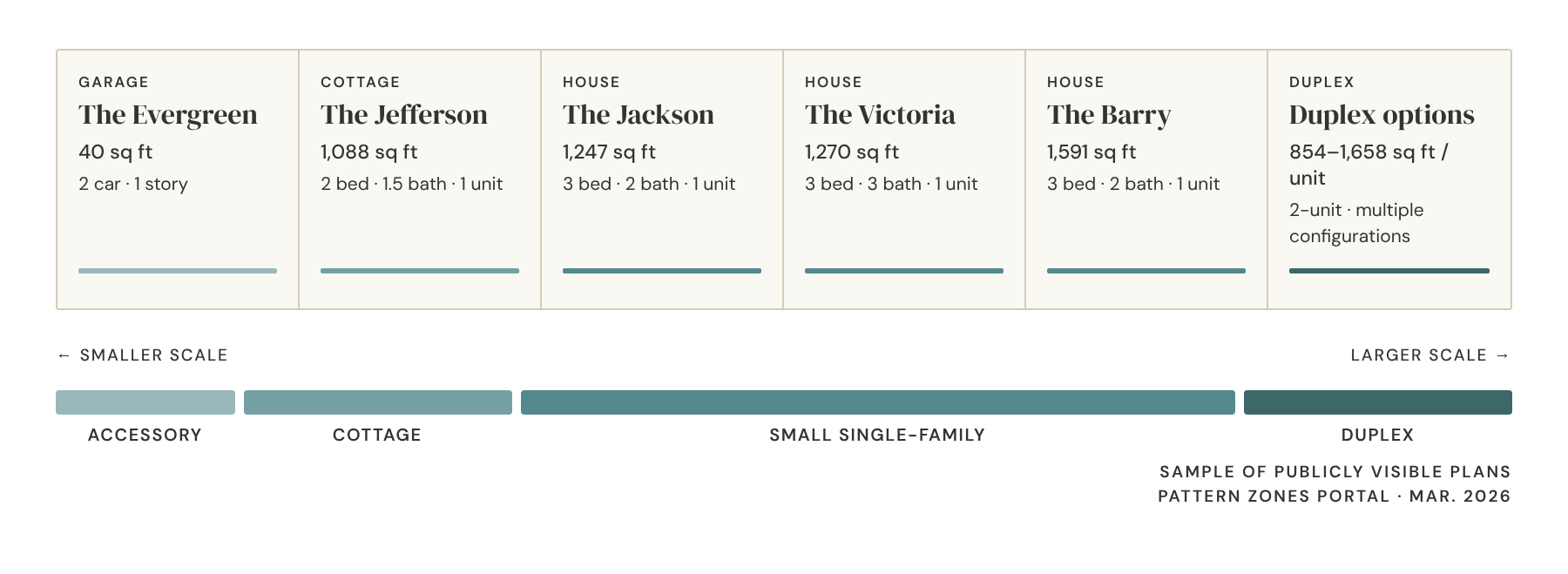
Clifton noted community engagement during the co-design process influenced neighbors opposed to the new developments to becoming neighborhood advocates. A similar dynamic in Overland Park, Kansas, played out before Portfolio Homes launched. A proposed triplex that drew neighborhood opposition was redesigned as a duplex with adjustments to scale and proportions and community support followed. That experience shaped the housing types and designs the city ultimately included in the program.
Petty mentioned that while some planners are aware of this strategy, few cities have pursued them. Overland Park is among the first in the region to implement a program, with others not far behind. The city of Kansas City, Missouri. is developing its own program with DRAW Architecture, with three plans approved and four more in development for an anticipated program rollout in 2027.
What we don't know yet
Preapproved plans are most powerful where zoning and land availability aren't the primary challenge . Overland Park's Housing Needs Assessment identifies both conditions working in the city's favor, noting that Portfolio Homes was designed to address a backlog of unbuilt homes and slowed construction rates through administrative change.
The program operates within existing zoning standards and site-specific factors — utility conflicts, lot-width constraints and parcel zoning — need to be resolved before a plan can be used. A single-family lot, for example, requires rezoning before a duplex plan can be applied. The plans themselves are designed for a specific set of housing types and the current catalog is not intended for accessory dwelling units, commonly known as ADUs.
Currently, regionwide data on permitting timelines and construction backlogs are limited. As more applications move through Overland Park’s process, the region will get a clearer sense of how programs like this can accelerate housing construction and adapt this method locally.
Next steps
Programs like Overland Park’s Portfolio Homes are just one piece of a larger effort to expand housing options across the Kansas City region. Pairing preapproved plans with technical assistance, financing tools or targeted subsidies can help more homeowners, small builders and developers lower the cost to start a project. Though the practice is still largely new to the region, the use of preapproved plans offers a promising strategy for addressing housing challenges and reducing barriers to housing development and attainability at the local level.
Learn more
Follow the RHP and attend the next session of the Housing Policy Innovation Series in May, where they will explore modular and prefabricated homes as another strategy for affordable and quality housing development across the region. To view the presentations from February’s Housing Policy Innovation Series on Preapproved Building Plans, visit MARC’s YouTube Channel.
Matthew Petty, Pattern Zones Co., Keynote
Community Spotlights – Kansas City, Missouri, Overland Park, Kansas and Claremore, Oklahoma
Question and Answer Session
Interested in working with MARC?
Contact Hannah Mitchell, regional housing program manager at hmitchell@marc.org.