Regional planners tackle housing challenges at MARC roundtable workshop

Jun 02, 2026
| Posted in
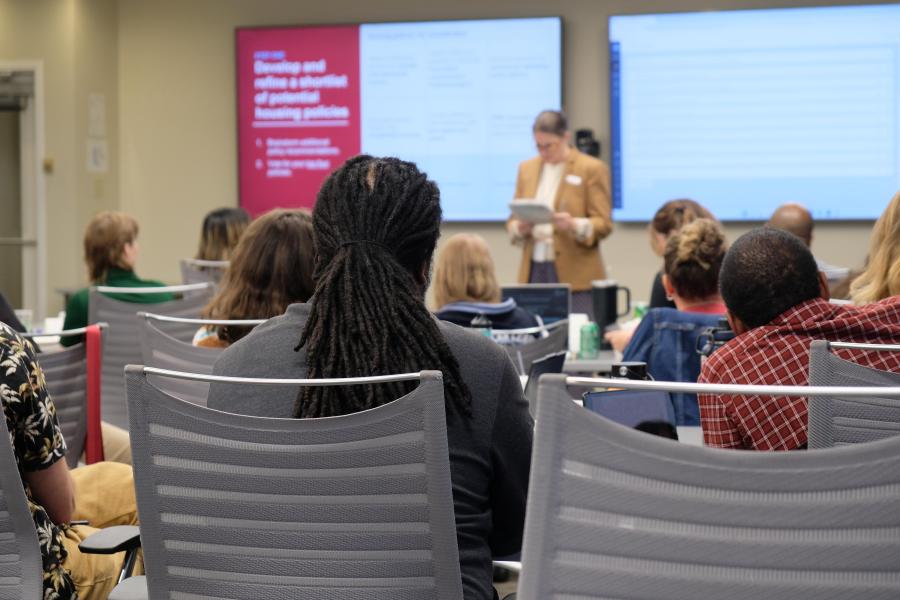
Shot of the audience, from behind, looking at the presenter

More than 65 planning professionals from across the Kansas City region convened for a recent Housing Policy Workshop hosted by the Mid-America Regional Council (MARC), the Kansas City Section of the American Planning Association (KC-APA) and the Greater Kansas City Regional Housing Partnership (RHP).  

The event created space for candid discussion about the complex barriers and emerging opportunities shaping the region’s housing landscape. 

Exploring shared challenges

Participants identified several common hurdles facing housing development across the region. Financing constraints, construction costs, zoning and permitting barriers and community or political resistance emerged as recurring themes. 

Planners said that while there is often consensus within the profession on potential solutions, conveying those ideas to decision-makers and residents remains difficult. Attendees stressed the need to improve public understanding of development trade-offs and outcomes of housing policy. 

One proposal that generated interest was organizing housing tours for local officials and community members. Participants said visiting peer communities with a wider mix of housing types could help stakeholders visualize how alternative approaches work in practice and reduce misconceptions about density and design. 

Spotlight on development barriers 

The discussion also highlighted the difficulties facing small-scale developers, especially those pursuing infill or missing-middle housing. Limited access to financing, combined with regulatory hurdles such as mismatches between zoning codes and building requirements, can make projects financially unfeasible. 

Infrastructure constraints further complicate development. Participants pointed to utility limitations, water system capacity and regulatory requirements tied to consent decrees as factors that increase costs or delay projects.

“There are systemic challenges that go beyond zoning alone.” 

one attendee noted, emphasizing the interconnected nature of policy, infrastructure and financing barriers.
Ideas for policy innovation 

Attendees proposed a range of strategies to address these issues at both local and regional levels. Ideas included:

  • Streamlining funding processes: Several participants advocated for creating a “one-stop shop” for municipal incentives and grants to reduce complexity for developers seeking public support. 
  • Supporting local investment: Some suggested prioritizing incentives that encourage local developers and investors rather than relying primarily on external capital. 
  • Expanding planning tools: Managing urban growth, statewide planning frameworks and transfer of development rights across jurisdictions were raised as potential long-term strategies. 
  • Engaging financial institutions: Participants emphasized the need for stronger collaboration with lenders, including exploring ways to influence lending practices that support more attainable housing options. 

Planners also noted that housing issues are closely tied to broader socioeconomic factors. Addressing income inequality and ensuring adequate social services are essential to any lasting solution. 

Navigating community perspectives 

The conversation also highlighted regional differences in attitudes toward growth. Some rural representatives described resistance to new development in their communities and a preference for directing growth toward urban areas. 

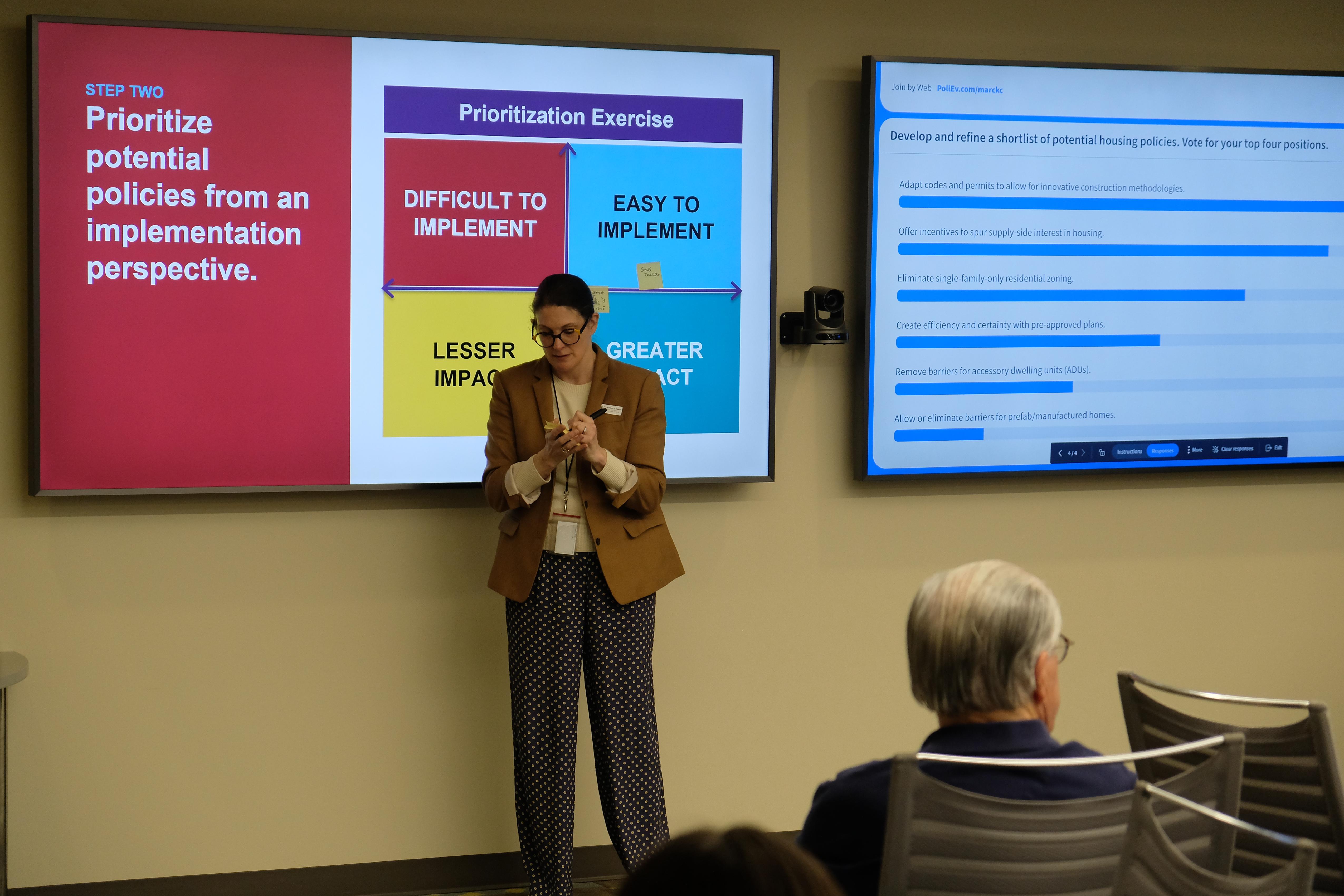
Zoning reform — particularly eliminating single-family-only zoning — prompted thoughtful discussion. While some participants pointed to recent reforms in nearby communities as promising models, they acknowledged the political and emotional complexity surrounding the issue. 

Man in green shirt at grey table taking notes
Attendee taking notes
Man in green shirt at grey table taking notes
Ashley Hand, director of local government services, leading a policy exercise
Looking ahead 

Despite differing perspectives, the workshop revealed a strong sense of shared urgency among regional planners. The conversation underscored the need for continued collaboration among local governments, planners, developers and financial institutions. Participants agreed that aligning policies and improving communication can help the region make meaningful progress toward a more equitable and attainable housing market. 

As part of its ongoing Planners Roundtable series, MARC will continue bringing stakeholders together to explore solutions and support coordinated, forward-looking planning across the Kansas City region. Takeaways from the workshop will informMARC and the RHP’s future work to develop policy guidance that helps cities and counties align regional and local housing goals.