2025 Ozone season recap

Jan 05, 2026
| Posted in
clouds

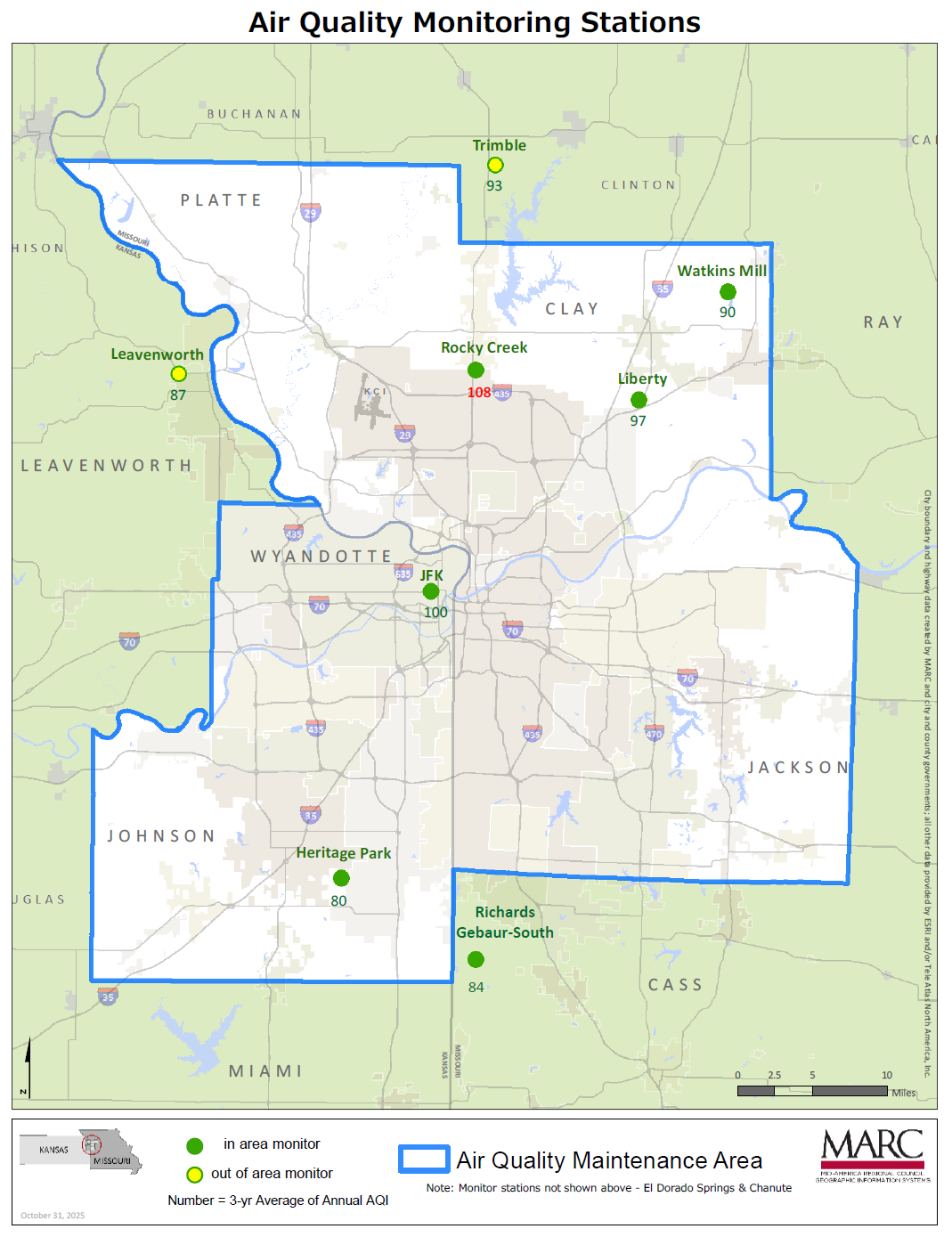
The ozone season for Greater Kansas City runs from March 1 through Oct. 31. At the conclusion of the 2025 season, the monitor at Rocky Creek, Missouri, indicated that the critical design value violated the national ambient air quality standard (NAAQS). 


Map of air quality maintenance area

What happened?

According to Doug Norsby, MARC air quality senior planner, there were a total of six days with air quality exceeding the NAAQS, including a red-level day in mid-July. The other orange-level exceedances occurred three times in June and twice in September.

“Timely weather systems and wind generally kept clearing pollution out of the area, particularly in July. But we had weeklong stretches of warm, stagnant dry air in May, June, September and October that elevated pollution levels to prolonged periods of yellow conditions,” Norsby said. “We will need to continue watching pollution levels carefully. In addition to the apparent violation at Rocky Creek, two monitors ended the season with design values of 70 ppb — right at the limit of the NAAQS.” 

How are readings calculated?

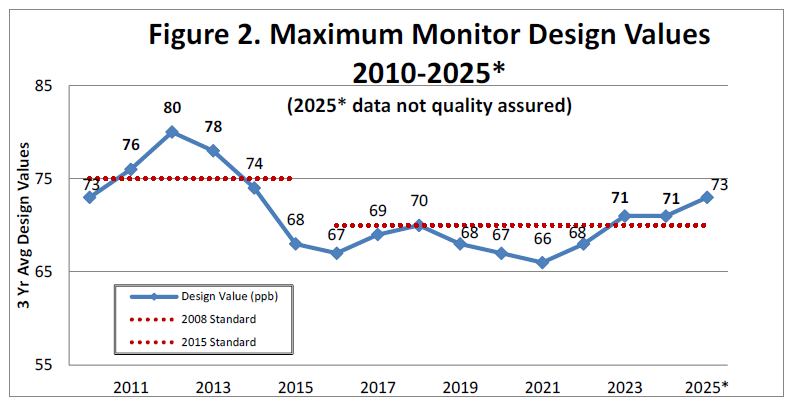
The NAAQS design value is measured using the fourth-highest readings (98th percentile) from the last three years of measurement, and the region has six monitors that measure air quality to determine overall compliance, Norsby said. In 2025, the Rocky Creek monitor exceeded the standard four times, and two other monitors exceeded the NAAQS twice. He said this meant that a number higher than the standard became part of the design value average for Rocky Creek. 

Kansas City maximum monitor design values

What does this mean for next year?

“The good news is that higher pollution measurements from 2023 will be replaced with new readings in 2026,” Norsby said. “This provides an opportunity to put our region on a much better path in meeting the NAAQS for the next several years.”

In 2023, the region was badly impacted by Canadian wildfires and smoke that swept through the area in June and July, coupled with stagnant air masses that stayed in place, allowing ozone to accumulate. 

How to help

To meet air quality goals, the MARC Air Quality program encourages everyone to walk, bike or use transit when possible. Fill up on fuel in the evening, invest in electric lawn equipment when replacements are needed and look for other opportunities to reduce air pollution.