Call for projects is now open for four federal funding programs

Feb 26, 2026
| Posted in
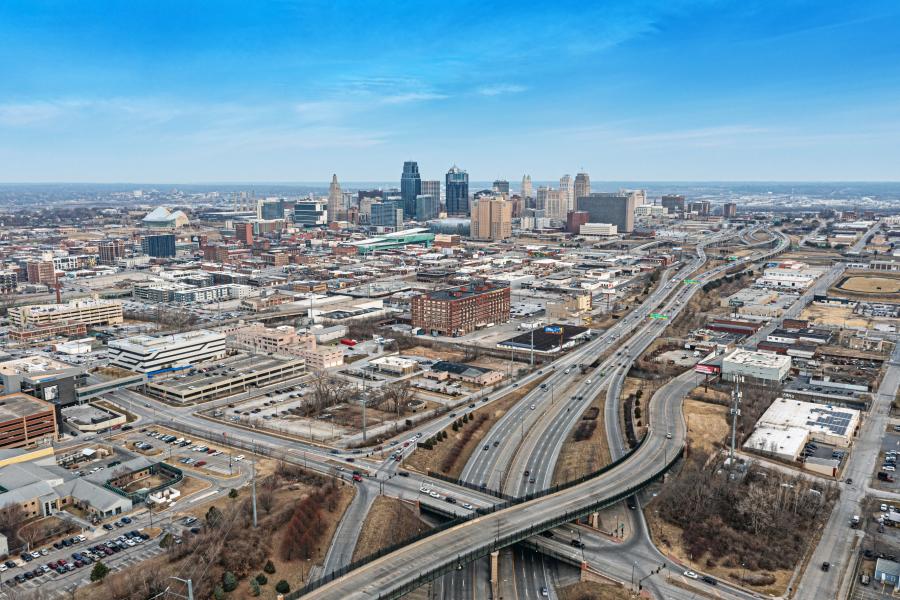
Panorama of Kansas City skyline during sunsrise

MARC is seeking project proposals for four Federal Highway Administration programs for fiscal years 2029 and 2030:

  • Carbon Reduction Program (CRP) for projects designed to reduce transportation emissions, defined as carbon dioxide emissions, from on-road sources.
  • Congestion Mitigation Air Quality (CMAQ) for transportation projects that improve air quality.
  • Surface Transportation Block Grant Program (STBG) for roadway projects on the federal highway system, capital improvements for public transportation and other multimodal projects.
  • Transportation Alternatives Program (TAP) for a variety of smaller-scale transportation and community improvement projects such as pedestrian and bicycle facilities, recreational trails, safe routes to school projects, vegetation management, and historic preservation.

Since the current federal transportation legislation expires at the end of federal fiscal year 2026, some uncertainty remains about the level of funding available for programming by MARC for 2029-2030. Considering this, MARC looks to recent historical levels of funding to provide a reasonable estimate of the resources available for programming purposes. Although some uncertainties remain, many transportation projects require lengthy lead-times to design and develop through the federal-aid process, so MARC is proceeding with this call for projects to provide time to complete that work. 

Application process

This funding opportunity will consist of two phases, a preapplication and initial screening followed by a full application and technical evaluation.

Preapplications are being accepted now through 4 p.m. on March 20. The full technical application is anticipated to open June 18 and close at 4 p.m. on July 24. Completion of both phases is required for funding consideration. 

Access to the application resources, maps and online form are on Suballocated call for projects.

Alignment with regional transportation goals

MARC’s vision is to be a region of opportunity where the robust economy, healthy environment and social capacity support the creativity, diversity and resilience of its people, places and communities.

Connected KC 2050, the region’s long‐range transportation plan supports the regional vision by establishing goals for a safe, balanced, regional multimodal transportation system that is coordinated with land‐use planning, supports equitable access to opportunities, and protects the environment. Project proposals submitted for consideration will be evaluated based on how closely they align with the policy goals of the plan.

Connected KC 2050 also includes a Programming Policy Statement that further supports the vision and is designed to aid the region as it makes progress in implementing the goals identified in the transportation plan and other regional policies. Project proposals will be evaluated for consistency with these policies.

Eligible applicants and uses

State and local government and transportation agencies located within MARC’s MPO boundary — Johnson, Leavenworth, Miami and Wyandotte counties in Kansas, and Cass, Clay, Jackson, Platte, and Ray counties in Missouri — may submit transportation projects for consideration for STBG and STBG set-aside funds. CMAQ funds are only eligible for use in the region’s air quality planning boundary — Johnson and Wyandotte counties in Kansas, and Clay, Jackson, and Platte counties in Missouri. Interested nonprofit entities, school districts and other nongovernmental agencies should contact MARC regarding their eligibility under these programs. 

Each of the four programs is eligible to fund a wide but specific range of surface transportation projects. 

Eligible transportation project types for this call for projects include, but are not limited to

  • Active transportation, including bicycle and pedestrian infrastructure.
  • Alternative fuel and diesel retrofit strategies to improve regional air quality.
  • Installation of electric vehicle charging and vehicle-to-grid infrastructure.
  • Installation and deployment of intelligent transportation technologies.
  • Use of natural infrastructure to enhance resilience.
  • Public transportation.
  • Outreach strategies to improve regional air quality.
  • Roadway and bridge capacity, management, operations, preservation and traffic flow.
  • Transportation safety.