TOP HONORS: Kansas Avenue, City of Olathe

Downtown Olathe Active Transportation Connectivity Plan, 2019

Project located along Kansas Avenue, between Santa Fe Street and Cedar Street in Olathe, KS.

Project Information

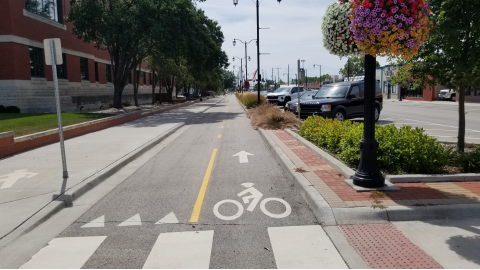
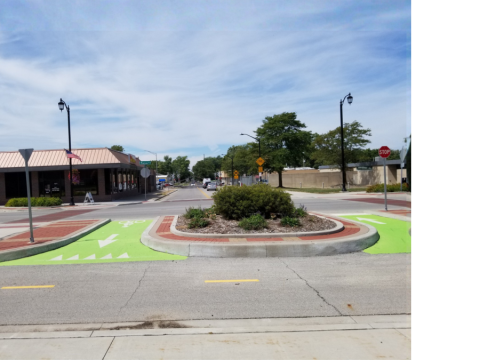
Kansas Avenue intersection showing new streetscape, bike sharrows, cross walk and road-narrowing bumpouts with flower planters

Project Description

Improvements included milling pavement and asphalt resurfacing, street base and subgrade repairs, concrete curb and sidewalk replacement, installation of ADA compliant sidewalk ramps, installation of a protected cycle track, installation of decorative hardscape and landscaping at intersections and in the cycle track median, installation of decorative streetlights, traffic signal replacement at the Loula Street intersection, the removal of traffic signal at the Park Street intersection, and placement of pavement markings for a road diet from three lanes to two. 

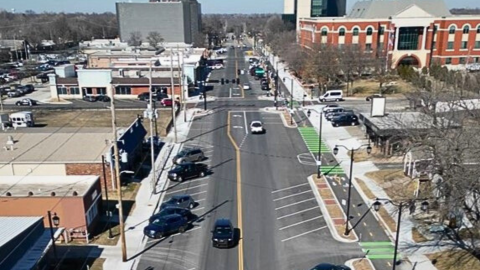
The lane reduction completely changed the cross section of this corridor from a section with narrow sidewalks, wide open pavement with on-street parking and travel lanes in-between; to a section with wide sidewalks on each side, on-street parking, narrow travel lanes, and a protected cycle track. Complete Street elements were included with all aspects of this project design.

Aerial view of downtown Olathe, featuring the streetscape changes along Kansas Avenue

Objectives of the Project

Olathe has worked to make downtown a vibrant destination. Businesses along the west side of Kansas Ave. include everything from law and bail bond offices to bike and barber shops. These businesses have staff and clientele that frequently walk across Kansas Ave. to the County Administration Building, Courthouse, and Park. The wide lanes yielded higher traffic speeds, which made pedestrian crossings and people backing out from angled parking more difficult. 

Goals for this project were to create safer pedestrian crossings, reduce traffic speeds, construct wider sidewalks, add a protected cycle track to connect to existing bike lane networks in downtown, and create an aesthetically pleasing atmosphere with tree and flower bed plantings, pretty streetlight fixtures, and add benches, trash cans, bike racks, and other pleasing facilities for multi-modal users. Thus, creating an environment for all users that would encourage people to check out downtown and encourage new development.

Bright green painted ingress and egress connectors linking separated bicycle lanes to the street

Lessons Learned

If you build it, they will come. Four new restaurants are coming to the downtown area. Three of them are going directly adjacent to Kansas Ave. Bringing restaurants into downtown Olathe was a big goal for Olathe. With all the city and county employees and jurors and other related businesses, there has historically not been many dining options downtown. People would have to get in their car and drive away to get lunch. 

Now you can see people walking around this area frequently. A new apartment building has been constructed a couple of blocks to the east of this project, as well as a new downtown library. Developers are looking to invest in downtown. The facelift of downtown Olathe is well underway, and the Kansas Ave. The streetscape project was a big part of that vision. The key to success for this project was careful planning and collaboration between the City, County, and Local Businesses. The timing and phasing of construction were paramount in keeping all parties happy.

GREEN & CONNECTED HONORS: Gillham Road

Gillham Road Corridor Bike Connections Plan, 2017

Project located along Gillham Road between 19th Street and Brush Creek Boulevard.

Project Information

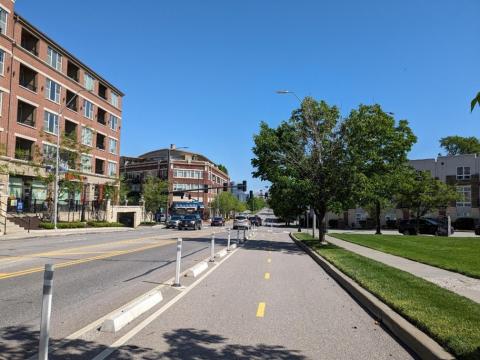
Bike friendly stretch of Gillham Road

Project Description

The Gillham Rd Corridor Bike Connections Plan identified a preferred alternative for a bike facility running along Gillham Rd. The preferred alternative was a separated cycle track running along the eastern curb line. The City installed the recommended configuration in phases. 

The first phase was from Brush Creek Blvd to Armour Blvd. The second phase continued the cycle track from 19th Street to Armour Blvd. The City has since installed further phases north of the original PSP study area.

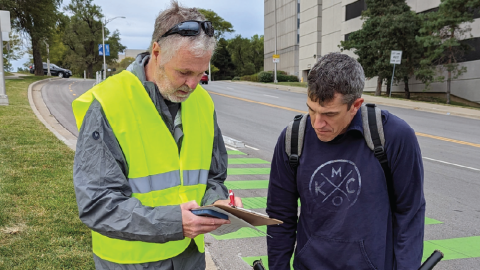
BikeWalk volunteer in a high visibility vest collects feedback from cyclist on the Gillham bike lane

Objectives of the Project

The purpose of this Planning Sustainable Places project was to establish a plan to make Gillham Road more friendly to all road users and not just for vehicles. 

The study objective was to establish a preferred cross-section for the roadway to implement improvements for pedestrians and cyclists.

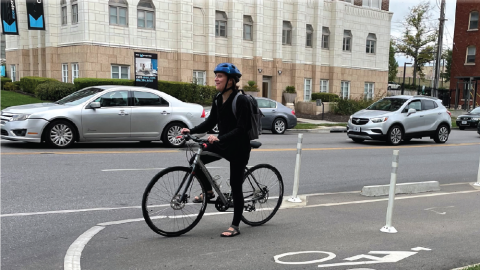
Cyclist breaks at intersection while riding along dedicated bike lane

Lessons Learned

The lesson learned on this project is that if you build safer and more protected infrastructure, then more walkers and bikers will use it. Thanks to the help of BikeWalkKC, a report was created to quantify and describe the success of this project.

Bike and pedestrian mode share at a spot along this corridor is over 6% of the intersection traffic. This is significantly higher than the regional average of mode share. Building the protected infrastructure truly did increase walking and biking users along this route.

GREEN & CONNECTED HONORS: Southwest Boulevard

Southwest Boulevard Transportation Study, 2021

Project located along Southwest Boulevard between 31st and Broadway.

Project Information

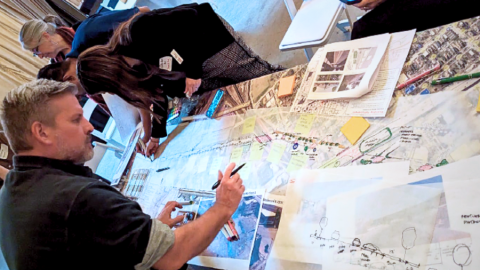
Participants mark up notes on plan blueprints for Southwest Boulevard

Project Description

The Southwest Boulevard project corridor runs through the heart of the Westside Neighborhood, a traditional Mexican-American neighborhood. The corridor study area runs from Broadway Boulevard to the north and 31st Street to the south. Southwest Boulevard is a major transportation corridor in Kansas City, Missouri, that connects and, at times, divides the community on the Westside. 

The Westside is culturally significant with many Mexican-American-owned and operated stores, restaurants, and services that have served the immigrant community for at least three generations. Even more, the Westside is widely recognized as a Hispanic cultural hub, a reputation earned from its unique dining and cultural destinations for the greater Kansas City region.

This plan emphasizes safety for vulnerable road users. The proposed road diet, shared-use path, pedestrian refuge islands, and enhanced crosswalks reflect a deep understanding of the corridor’s challenges and opportunities. These improvements are rooted in the community’s affection for “The Boulevard” and its vision of Southwest Boulevard as a safe, inclusive and vibrant public space.

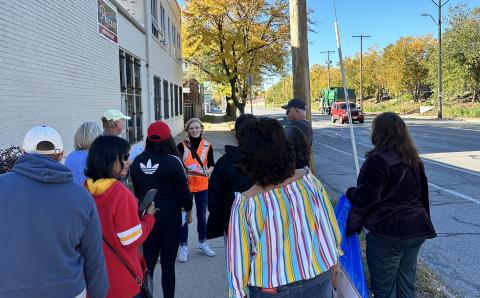
Walking tour led by woman in high visibility vest along Southwest Boulevard

Objectives of the Project

The Southwest Boulevard Transportation Plan focused on creating a safer, more accessible, and culturally vibrant corridor. It addressed traffic safety, pedestrian accessibility, stormwater management, and placemaking, with a clear emphasis on improving quality of life. Each recommendation of the plan directly ties back to the project's overarching goals and the community's vision, ensuring that the plan not only meets immediate needs but also aligns with long-term aspirations for the neighborhood.

The objective of the Southwest Boulevard Transportation Plan was to address issues related to transportation, neighborhood identity, elements within the public right of way, and the natural environment. One goal of the plan was to identify improvements to mobility and access for people in the Westside neighborhood. Another was to engage with the community, focusing on participatory planning and consensus building, utilizing a full bilingual approach. Finally, the plan aims to develop a detailed, data-driven implementation plan that aligns with previous and future planning efforts.

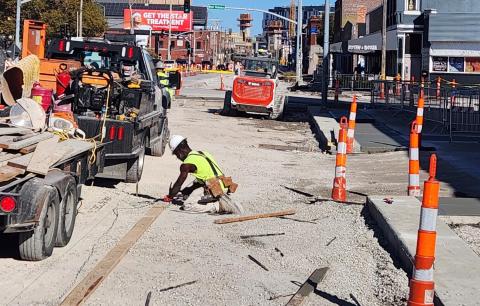
Construction site repaving and altering lanes along Southwest Boulevard

Lessons Learned

Project partners learned many lessons during the course of the planning effort. One of the unanticipated lessons was that the neighborhood mostly just wanted basic services: like maintenance of existing infrastructure, trash and brush clean up, and fixing broken and leaking water lines.

Most of these requests were able to be identified and quickly resolved through maintenance activities. The neighborhood was also weary of gentrification and suspicious of investments that might further gentrify the neighborhood.

VIBRANT & GREEN HONORS: Downtown Overland Park

Overland Park Downtown Event and Transportation Study, 2017

Located at 7950 Marty Street, between W 79th Street and W 80th Street in downtown Overland Park.

Project Information

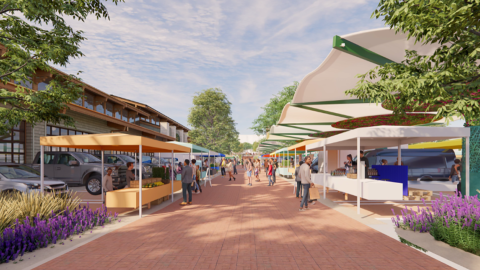
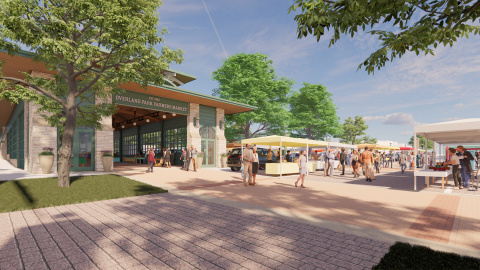
Rendering of open air farmers market

Project Description

Recognizing the Farmers’ Market’s vital role in Overland Park’s identity and downtown revitalization efforts, the City explored additional uses for the market pavilion and ways to strengthen the downtown neighborhood.

The study laid the groundwork for future investments by conducting a trade area analysis, examining demographic trends and food purchasing behavior within three distinct areas around the market. The study also included a transit and parking analysis and evaluated opportunities to improve bicycle and pedestrian access.

In 2021, staff prepared an RFP to identify creative partnership opportunities to bring the project to life. The City specifically sought a mixed-use development that would include a reconstructed Farmers’ Market, flexible public space, parking, a year-round public gathering space, and improvements to activate Overland Park Drive. In 2024, the City of Overland Park approved a plan to proceed and construction began in December 2024.

Renderings of a pavilion entryway to an open air market

Objectives of the Project

The objective of the Study was to explore options for enhancing both the market facility and downtown accessibility during market and similar events. 

The project goals included: accommodating large downtown events like the Farmers’ Market; creating a new or improved market structure that supports growth, enhances comfort for customers and vendors, and adds new amenities; expanding transit service, improving pedestrian connections to downtown businesses to promote greater downtown density, and encouraging alternative transportation; and assessing the economic feasibility of a more flexible event and community gathering facility at the current or alternative locations.

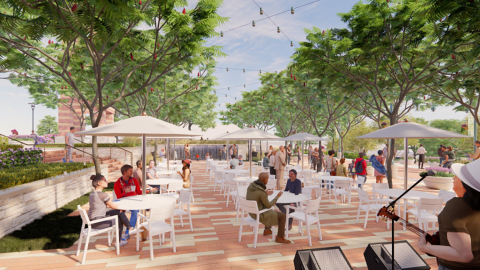
Renderings of patio tables lined up along a wide pavilion area

Lessons Learned

The importance of adaptable planning and robust engagement when undertaking significant urban development projects. The decision to keep the current location of the Farmers’ Market went against the initial recommendation but allowed for the redevelopment of Santa Fe Commons into Thompson Park.

The power of persistent and diverse community engagement. After the initial study, project partners continued to engage a wide range of stakeholders, including vendors, shoppers, residents, and merchants. This sustained engagement not only built consensus but also provided invaluable feedback that shaped the refined plans, ultimately leading to a more inclusive and effective outcome.

Urban development is an iterative process. The initial study identified the need for improved transportation access and a multi-purpose event space, yet determined the existing facility was not suitable for broader events. The subsequent phases, however, have shown how these challenges can be addressed incrementally.

VIBRANT & GREEN HONORS: College Boulevard

OP Central Plan, 2017

Located on College Boulevard from Lowell Avenue to Nall Avenue, extending from I-435 to 112th Street.

Project Information

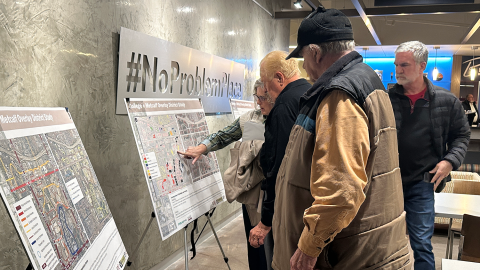
Citizens look over maps and diagrams for the OP Central plan

Project Description

This land use and transportation planning effort looked to support the long-term vitality of the College Boulevard Corridor. The focus of the OP Central plan was to develop a plan for an active and walkable environment around the Convention Center that supports an 18-hour environment; a strategy for accommodating transportation needs in the area and creating a multi-modal transportation approach; a strategy for supporting corporate continuity and the ability for employers to attract talented employees.

Since the plan’s adoption, the extended study area has seen a mix of development, including the approval of more than 2,200 housing units and more than two million square feet of new office and retail. The City completed a road diet project, which also added on-street parking, and received a federal grant to build a new linear park and multi-use path, along with intersection improvements and pedestrian & bicycle connections, and pedestrian wayfinding.

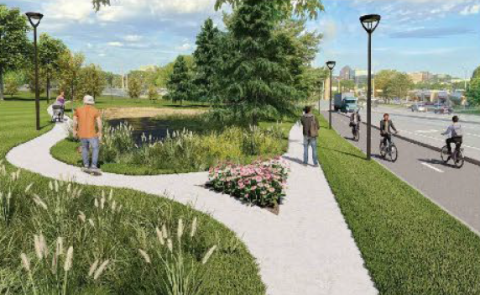
Rendering of sidewalk through path lined with native plants and trees, with a protected bike lane running parallel to it

Objectives of the Project

More than 30,000 jobs are concentrated along the College Boulevard corridor. The plan’s goals were intended to help the City define the corporate campus of the future; address the needs of visitors, employees, and residents to work and recreate in a quality environment; create a gathering place for the City; and define the needs for a walkable environment that supports multiple modes of transportation.

The project specifically aimed to identify components necessary to create a comfortable pedestrian network that allows residents, employees, and visitors to walk to amenities and entertainment; appropriate locations for community gathering spaces, amenities, and entertainment options in the node; and opportunities for a range of development options, including residential uses, to activate the corridor with 18-hour activity that supports the health and wellness focus of businesses along the corridor and the desire of employees and visitors for work/life balance.

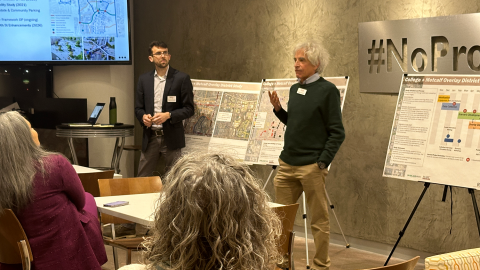
Presenters speaking to assembled citizens about OP Central project

Lessons Learned

The effort and implementation of the OP Central Plan highlight the importance of planning as a first step for action. The Plan brought various stakeholders and City Departments together with unified support for action to maintain the corridors’ vibrancy. An approved outline of implementation steps allowed the City to identify next steps and plan for the financing and engineering work necessary to bring City projects to fruition. 

The City’s ability to lead through planning and implementation of public improvements on the corridor, coupled with a recent designation of the corridor as a Strategic Investment Area, has helped spur the private investment necessary to achieve the vibrant corridor envisioned by the plan.