Municipal Solid Waste Hauling

Overview
Municipal solid waste hauling refers to the collection and transportation of everyday trash from residential, commercial and industrial sources to designated disposal or processing sites.
Solid waste hauling services vary across municipalities in the Kansas City region. Most municipalities contract providers for all residents, while others allow individuals to choose their own haulers in an open-market system.
Transfer stations
After your garbage is collected by a hauler, it's typically taken to a transfer station.
What is a transfer station?
Transfer stations are industrial facilities designed to consolidate waste before it's transported to its final destination, typically a landfill or recycling center. Engineered to minimize environmental risks, these stations serve garbage haulers, businesses, and even residents who drop off waste directly.
Rather than sending every truck to distant landfills, some of which are located outside the metro area, transfer stations streamline the process, reducing transportation costs, fuel use and greenhouse gas emissions. They also help sort out items that shouldn’t go to landfills, such as hazardous waste, electronics, tires, yard debris, and even bicycles, which are sometimes repurposed through partnerships with nonprofits like Revolve KC.
[Insert map]
Where are transfer stations located?
Transfer stations are strategically placed across the Kansas City metro to serve the region efficiently. Imagine every garbage truck driving all the way to a landfill in Kansas—transfer stations help avoid that, making waste management more sustainable and cost-effective.
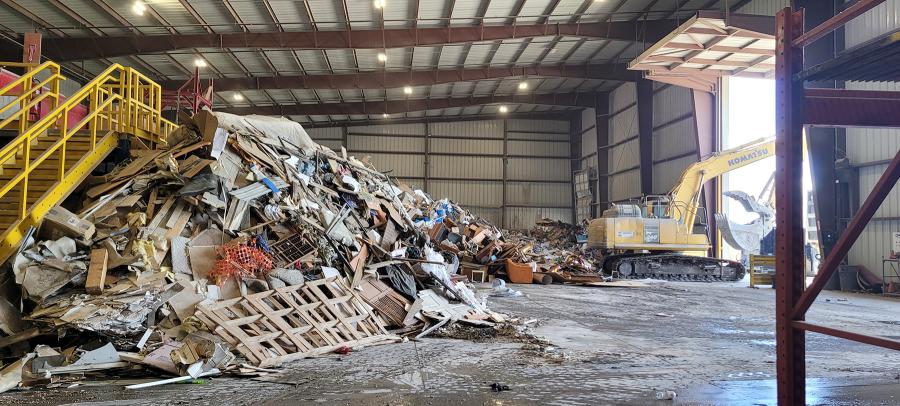
How do transfer stations work?
At facilities like the Leavenworth County Transfer Station, the process is straightforward yet highly efficient:
- Outside: Residents sort and deposit materials into clearly marked containers.
- Inside: Trucks unload waste onto a tipping floor, where staff remove any prohibited items.
- Next: The remaining waste is consolidated and loaded into larger trucks for final transport.
These facilities operate under strict state and local permits, with approval cycles typically ranging from 5 to 10 years. Careful zoning and planning ensure they function safely and responsibly—especially in areas close to neighborhoods.
Landfills
Our regional landfill capacity is projected to last another 19–37 years, meaning a new site likely won’t be needed for at least two decades. However, rising populations and consumerism bring uncertainty to these estimates.
While the term “landfill” often carries a negative connotation that implies environmental risks, it's important to understand how they work. Watch this video for an overview.
Landfill regulations and capacity
Modern landfills are carefully designed and regulated under the Resource Conservation and Recovery Act (RCRA) Subtitle D. They require monitoring during operation and for at least 30 years after closure. Planning and oversight fall to state and local governments.
Our region relies heavily on private landfills, except for St. Joseph. As Missouri sites reach capacity, Kansas landfills will take on more waste. This shift will affect communities differently, raising environmental justice concerns and potentially increasing disposal costs.
Sending less to landfills
Organic waste decomposes anaerobically in landfills, producing methane, a greenhouse gas 80 times more potent than CO₂. These emissions contribute significantly to global warming if not captured and utilized.
Recycling, composting, and reducing food waste help extend landfill capacity and cut methane emissions. Using available services in the Kansas City region and sorting waste intentionally are key steps toward minimizing environmental impact.