Stormwater field training showcases practical solutions for landscape professionals

Jun 08, 2026
| Posted in
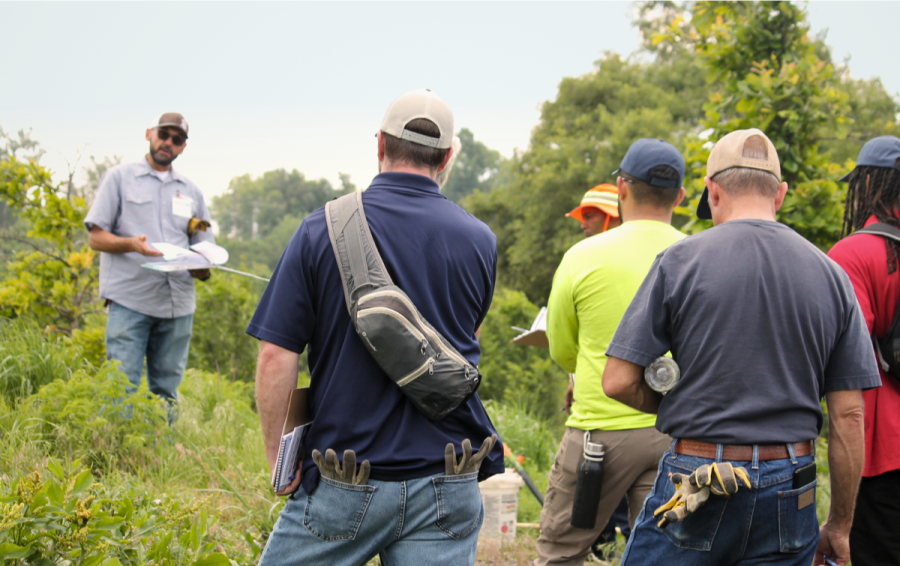
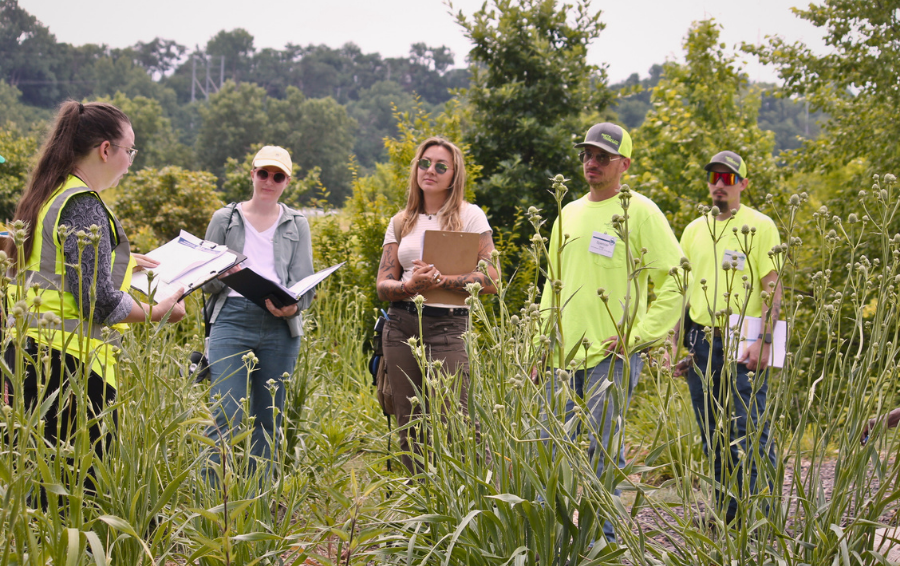
Instructor discusses items on a clipboard to trainees dressed in high-vis clothing in an overgrown field

The field training, part of the Mid-America Green Stormwater Infrastructure Certification Program, followed a classroom workshop covering modern stormwater management best practices. The certification program was created in response to the increasing importance of green stormwater infrastructure (GSI) installations in retaining and treating stormwater runoff. Surface water pollution occurs when heavy rains send excess water across streets and other impermeable surfaces toward our stormwater drains — picking up a variety of road oils and other contaminants along the way. This contaminated water is deposited, unfiltered, into our region's streams and rivers.

Inside the training

The training focused largely on the ongoing maintenance of GSI installations, such as spongy rain gardens and bioswales, with deep-rooted native plants that absorb more water than traditional landscaping, and permeable pavements that allow for better penetration of water into the soil. These best practices help communities manage stormwater to protect water quality and streams within developed areas. And although they are designed for lasting environmental benefits, long-term success depends on regular inspection, vegetation management and proper upkeep.

The morning agenda kicked off with presentations covering the role of GSI professionals in tackling runoff and flood control through GSI site plan inspection and management of critical components. Participants reviewed common maintenance challenges, learned how to identify signs of system failure, and discussed practical strategies for preserving performance throughout the life of a GSI site. Instructors also highlighted the ways native vegetation contributes to infiltration, pollutant removal and habitat creation. They reviewed with the group how to distinguish desirable species from undesirable nuisance weeds (and, more importantly, from invasive plants that threaten the life of the system itself). Table groups discussed how maintenance can evolve throughout the year as vegetation establishes and matures.

Field trip

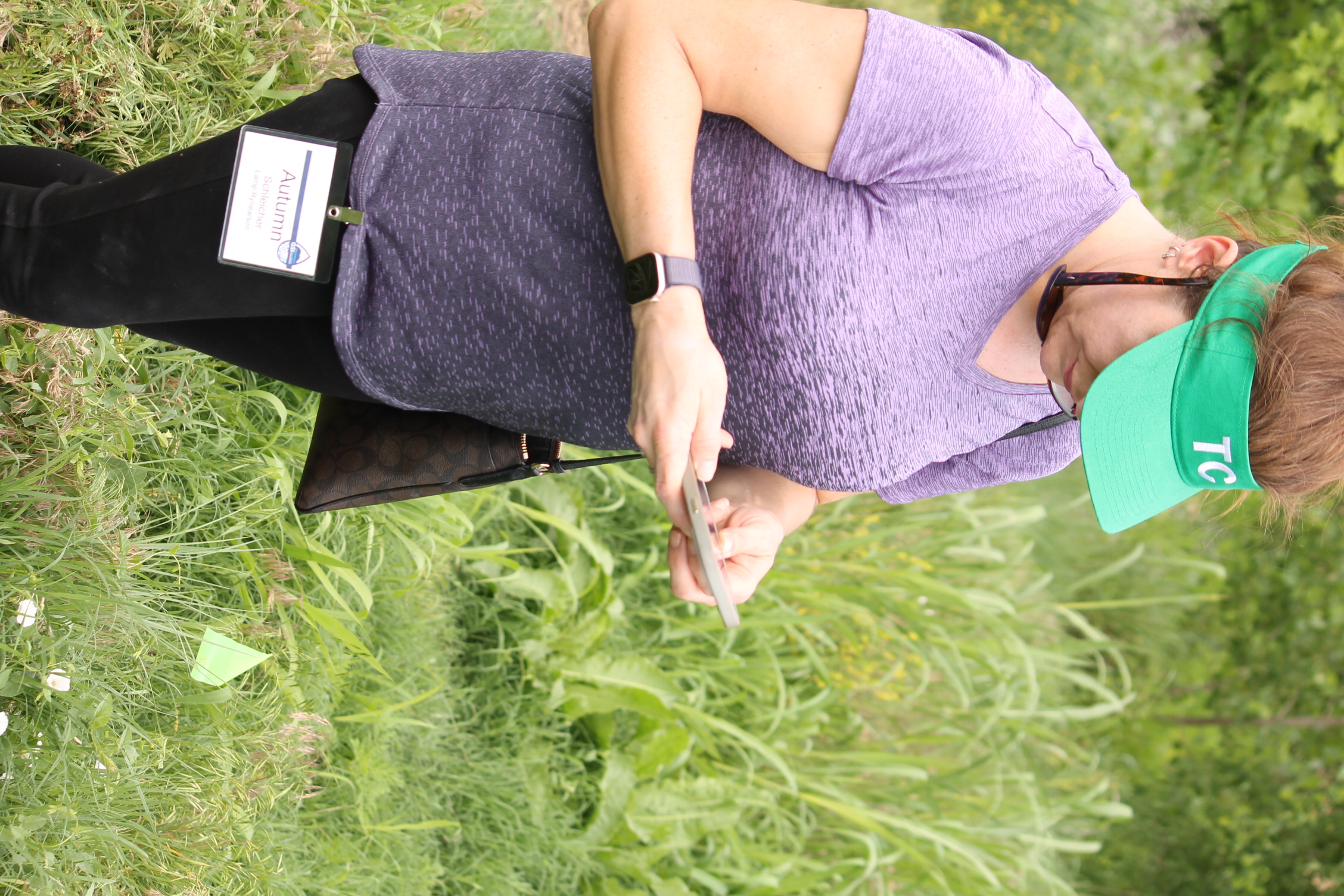
Participant uses smartphone application to differentiate undesirable weeds from invasive species.
A training participant uses smartphone applications to differentiate between native plants, undesirable weeds, and invasive species.

Following the classroom session, the trainees traveled to the West Bottoms for an interactive field tour, where they observed a large-scale "bioretention" with diverse native plantings. Breakout groups evaluated how design choices influence long-term maintenance needs and adaptive management strategies. Along each stop, participants identified and assessed conditions of plants, materials and GSI function. Instructors discussed maintenance history, and groups identified opportunities for improvement, such as replacement of dead plants with more species suited to the conditions, and ensuring vegetative coverage of bare soil with beneficial plants.

The field component generated conversations about common challenges faced by public works departments and property owners responsible for maintaining GSI assets. Participants shared their own GSI maintenance experiences and discussed how best practices, like the newly updated APWA 5600 manual, can be incorporated into future projects.

Wrap up and reflections

The Mid-America GSI Certification program reflects the region's growing commitment to sustainable stormwater management and workforce development, and a better understanding of how to apply new maintenance standards in local communities. And the curriculum isn't solely focused on municipal employees.

"For private sector contractors, the experience of formulating actionable steps to apply these standards in real-life settings will help make bids stronger in a market increasingly looking for GSI-trained labor."

Natalie Unruh, MARC Water Quality Planner
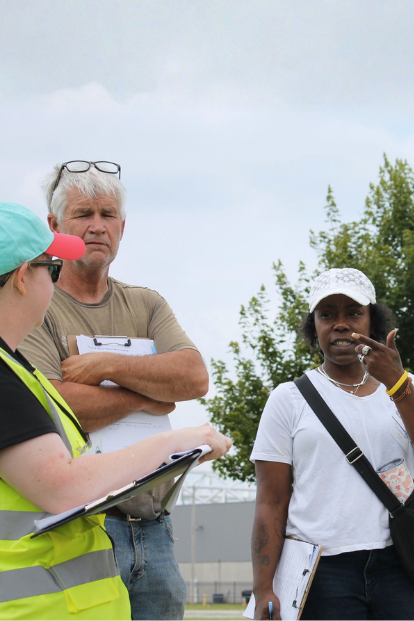
Training coordinator describes native plant installation to participants with clipboards and high-vis clothing

Upcoming trainings

If you are interested in participating, there will be a fall training covering the grey infrastructure elements of GSI and fall maintenance in early October, with recurring spring and fall trainings in 2027. Participants will need to first complete on-demand certification training online and will need to complete both a fall and a spring field training, though they may attend them in any order and in different calendar years.

Participants ask questions to training coordinator carrying clipboard in a forested field