
Strategy 11
Support statewide Extended Producer Responsibility (EPR) laws for recycling of paint, batteries and mattresses.
Extended Producer Responsibility (EPR) laws establish manufacturer‑ and retailer‑funded systems for collecting and recycling specific materials. For example, in Missouri, it is illegal to landfill lead‑acid batteries. Retailers are required to take back an old battery for every new one sold and must collect a small fee ($0.50) on each new purchase to support recycling. Although this program is not considered full EPR legislation, it still delivers significant benefits by ensuring the recovery of a highly recyclable material. As a result, Missouri maintains a 99% recycling rate for lead‑acid batteries.
| Diversion impact | Significant | High | Important |
|---|---|---|---|
| Community Benefit | Impactful | Inspiring | Hidden |
| Value | Enhanced | Retained | Jobs |
| Ease of implementation | Expandable | Removable barriers | Long-term effort |
Strategy details
Diversion Impact
Significant
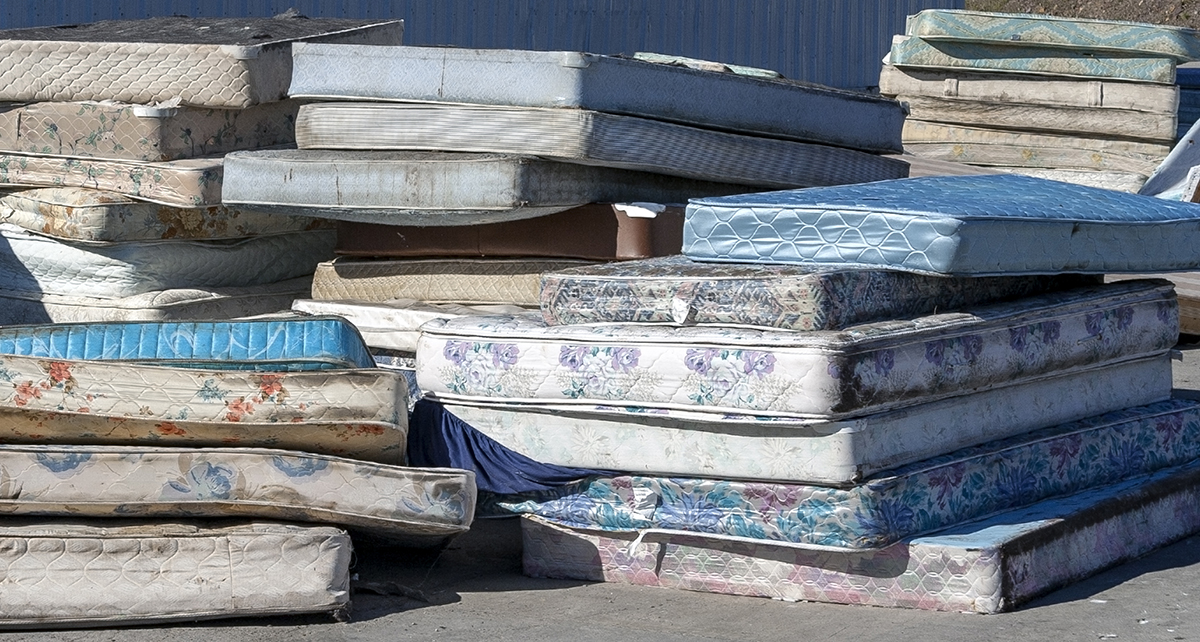
Expanding EPR legislation to recycle paint, batteries and mattresses would divert materials from landfills in Missouri and Kansas. Diverting paint and batteries from landfills reduces health and safety risks. Mattress diversion conserves dwindling space in current landfills that have a limited lifespan.
Community benefit
Impactful
In addition to mitigating risks and conserving landfill space, the benefits of EPR legislation include: material recovery (e.g., paint for reuse, critical materials from lithium-based batteries, and wood, metal, textiles and more from mattresses), behavior change that results in high levels of recycling, funding to help launch and/or subsidize recycling operations, and local job creation.
Value
Jobs
Recycling items generates fifty times more jobs than landfilling them, according to the Material Flow Analysis for the KC Metro Area published in 2025. EPR also encourages producers to begin redesigning products for circularity and reducing their harmful effects.
Ease of implementation
Long-term effort
Collection points and recyclers/processors for these waste streams already exist. However, the challenge will be getting buy-in from the state legislature to pass a statute that places additional responsibilities on corporations. It's important to highlight the benefits for job creation, national defense, critical infrastructure, import replacement and local resiliency that will come as a result of the new EPR legislation.
Getting started
- Provide sectors with information about additional pathways to landfill waste diversion through product stewardship and extended use.
- Highlight successful models of EPRs adopted in other states across the country.
Stakeholders
- MO Department of Natural Resources
- Missouri Coalition for the Environment
- Circular KC
- Circular STL
- Operators of landfills
- MRFs and transfer stations
- Current solution providers
- Relevant manufacturers and retailers